AI-Written Résumés Are Becoming the Norm. Hiring Must Move Beyond Reading Them.
When application documents change, hiring should change too. AI can help teams examine the substance of a candidate’s experience and make more time for meaningful conversations.
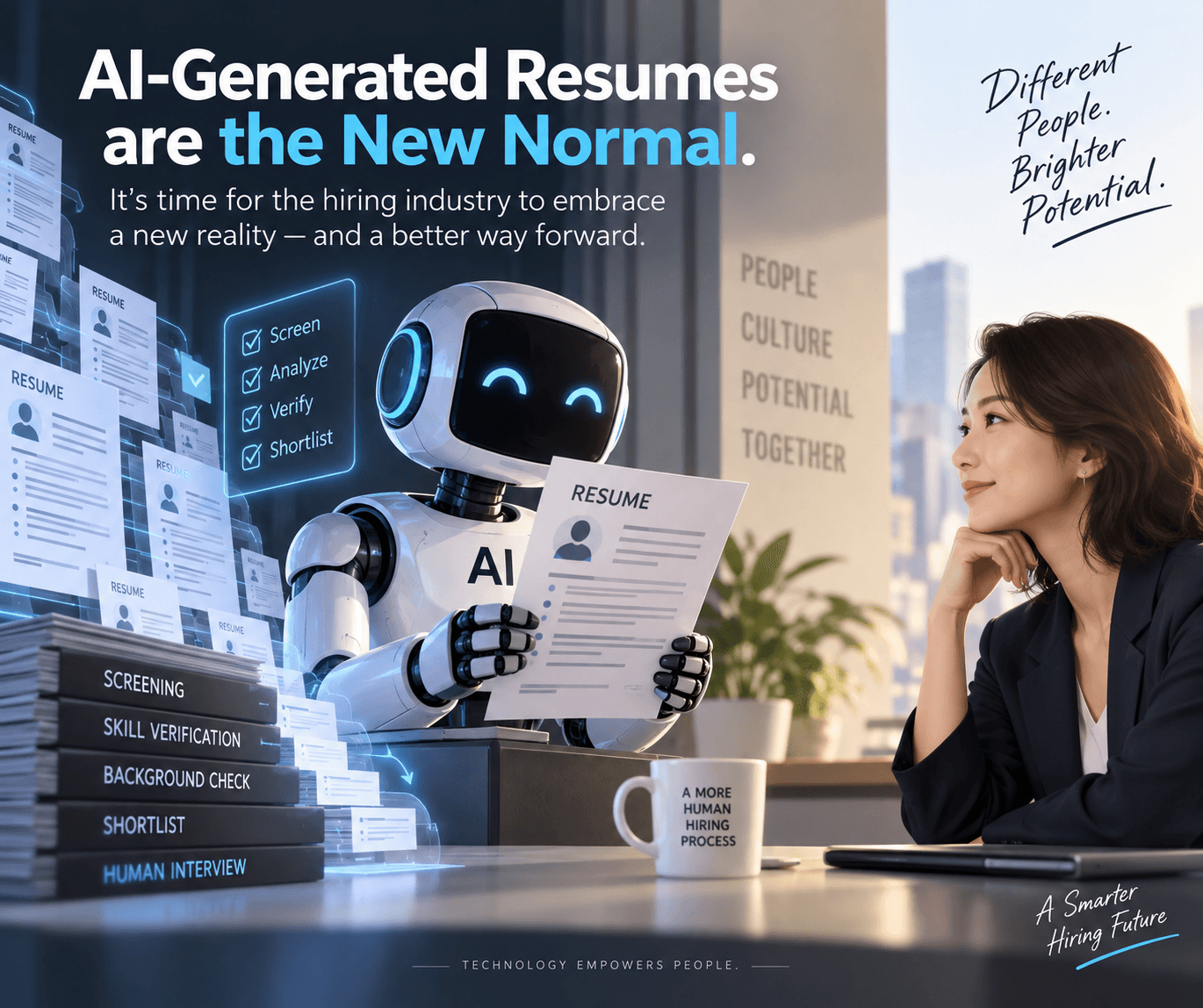
The rapid evolution of AI is changing how people write résumés and describe their careers.
Candidates can enter their experience and skills to generate a draft, improve something they have written, or tailor how they present their background to a particular role. These uses will become increasingly common.
I believe employers need to design their hiring processes with this change in mind.
There are limits to banning AI
Some employers prohibit AI-assisted applications or view them unfavorably.
Yet AI is already used for writing, translation, research, programming, and data analysis. In that environment, how long can we insist that a résumé must be written entirely without AI?
This does not make it acceptable to invent experience or achievements. Improving how a fact is expressed is different from fabricating the fact itself.
Hiring processes need to start from the assumption that application documents may have been drafted or edited with AI.
A polished résumé is not proof of ability
AI can help people who are less confident writers create clear, logical, professional résumés. Making it easier to communicate their experience is a real benefit for candidates.
For employers, however, judging someone’s ability or character from the quality of their prose becomes even more difficult.
Imagine receiving 100 polished résumés from 100 applicants, then reading each one and comparing wording and structure to decide who advances. Is it time to rethink that approach?
Use AI to help examine the substance
If AI makes preparing applications more efficient, employers should use it too. AI can help organize documents, compare requirements, and support initial screening, reducing the burden on people.
But summarizing documents and ranking applicants is not enough. When someone lists experience, a skill, or an achievement, the next step is to ask what they actually did, how they contributed to the result, and what evidence can reasonably support their account.
AI-assisted verification has limits. A candidate’s account, confirmed facts, inferences, and unresolved questions must remain distinct. AI output alone should not determine whether a claim is true or whether someone is hired.
Move from simply reading application documents to examining the claims they contain.
Give people more time for dialogue and judgment
This is not about removing people from hiring. The aim is to create more time for people to engage with one another.
When AI supports document organization, requirements checks, and basic questions about experience, recruiters can spend more time talking with candidates: understanding their approach to work, communication, collaboration, and future development.
Those conversations should work both ways. Employers need to understand candidates, and candidates need to understand whether the organization is somewhere they want to work.
AI should help us use human time for a more human hiring process.
Redesign hiring for the AI era
Using AI to write a résumé or career history will increasingly become ordinary. Rather than focusing only on whether someone used AI, we should ask how to understand candidates more accurately and efficiently in a world where AI is part of the process.
Candidates use AI. Employers use AI. People focus on the conversations and final decisions that matter most.
That is the kind of hiring process we are working toward at ZipUpp.
If AI changes application documents, hiring must change with them. I believe this will become the new normal.